
Common Business Challenges and How to Solve Them | ERP, Processes and Data
What problems do companies most often face? Why do they arise, and how do we at Essence help address them?
In most cases, these challenges fall into three areas: processes, technology, and people.
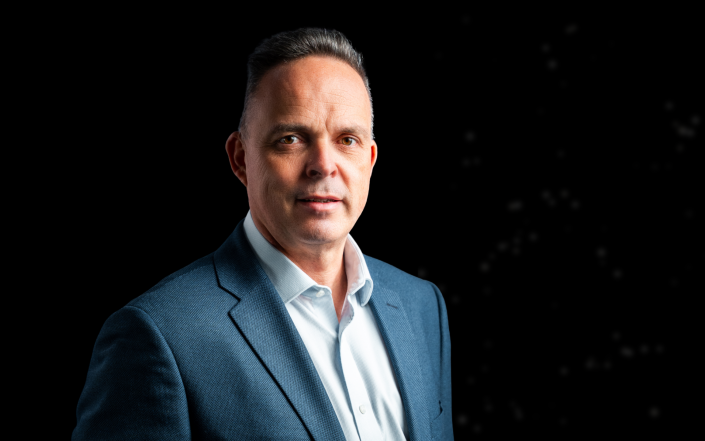
In this article, Zdeněk Pezlar, Managing Director and Co‑Founder of the company, draws on practical experience from ERP implementations where technology meets real business processes and the day‑to‑day work of people. He focuses on situations where technology collides with the actual functioning of the company, its processes, and everyday operations.
1. Poor vendor support / technical debt
It often happens that the implementation partner delivers the basic work, launches the system – and disappears. The company is then left on its own. After some time, it discovers that it no longer has updates, does not know what the system actually does, and starts living with something that is more of a burden than a help. We call this technical debt.
Of course, it can also be situations where the vendor does not disappear, but provides insufficient support, resolves issues slowly, or the system is no longer being developed. Or situations where a company moves from one vendor to another because the original partner could not handle growth or change. The result is frustration, underutilization of the system, higher costs, and chaos.
When we take over such a client, we start with an audit. We map the current state, set up communication, and establish long-term support and service even after implementation – “Implementation is not the end of our work, but just the beginning.”
Our customer portal also helps – the client can see all requests, their status, and billing. To support existing clients, we have a dedicated team of employees with a well-developed support system.
Our goal is for the company to regain confidence in its ERP system, not uncertainty.
2. Unclear processes and lack of readiness for change
Companies often want a new system, but in fact do not really know how they operate. Each department follows a different process, each individual uses a different Excel file. And then they are surprised that implementation is difficult. ERP only reflects what exists in the company – and if there is chaos, it reflects chaos.
The company enters the project without a clear description of how its processes work, or even better, how they should work in the future. The solution may then not correspond to reality. This is one of the most frequently cited project risks. At the same time, processes often remain stuck in the past, are laboriously interconnected, or differ across departments – complexity and inefficiency are carried over.
We start with process diagnostics – workshops with key people. We map what works and what does not. Only then do we design the system to simplify and unify processes.
We initiate this mapping using specific, complete solutions; we do not conduct analysis only through discussions. Instead, we present concrete solutions for the given segment, for all parts of the company, and discuss how they could meet the requirements, or what needs to be adjusted. Together with the client, we thus co-create a concrete description of optimized processes. This adjusted solution can then grow along with the company and respond to future changes in its processes.
3. Resistance to change / low user engagement
Another pain point is purely human – resistance to change. Why is it so difficult? A change in ERP means a change in how people work. People are afraid of losing certainty or that the new system will slow them down.
ERP projects are not just technical – people’s work, habits, and responsibilities change. If users do not understand the purpose and have no answers to the questions “why” and “how,” resistance and low adoption follow. The result is that the system is used only partially or incorrectly.
So how do we help overcome this fear?
We run workshops and training sessions, and we appoint pilot users – change ambassadors. The key is open communication. We tell the truth and explain why and how things are changing.
At Essence, we see ERP projects primarily as projects of human behavior change. Technology is just a tool.
Our approach is partnership and understanding – meaning that we emphasize the involvement of people and processes, not just a technology replacement. At the same time, we provide high-quality post-implementation support, training, and a service portal.
4. Incompatible systems and technological mix
It is common for a company to have one system for warehouse management, another for invoicing, a third for projects – and each has its own database. People then manually prepare reports in Excel and lack an up-to-date overview.
In general, companies have multiple systems with poor integration, fragmented data, or solutions that cannot grow with the company. And a system that does not allow growth loses its relevance.
How do we address this at Essence?
We build on Microsoft Dynamics 365 Business Central – a platform that enables the integration of all parts of the company while allowing growth. Everything is in the cloud, synchronized, scalable, without the need for lengthy updates. Automation of processes and data flows between systems reduces the need for manual tasks and minimizes duplicate work.
In addition, we have our own products and frameworks that allow rapid integration of third-party systems. And all of this is built on the Microsoft platform, which offers many integrated products or products ready for integration.
5. Low data quality and missing reporting
The final pain point – data. Everyone has it, no one trusts it. Companies have systems full of data, but when you ask about the profitability of a product or project, no one knows.
Even if the system is running, data may be incomplete or inconsistent, making reporting and decision-making impossible. Or the data is not available in real time.
How do we work with this?
We help with data cleansing and setting up reporting. Our solutions include real-time management reporting. You do not have to wait for someone to prepare reports – reports tailored to individual roles are available, current, and online.
Data is validated, migrated, and configured to be consistent and to serve as a reliable basis for decision-making. In addition, users communicate around processes directly within the system; nothing is hidden or can be lost.
We say that ERP is like an engine – and data is the fuel. If the fuel is bad, the engine will not run. ERP is not just about accounting; it is about comprehensive company management, which requires the right data at the right time.
6. How to keep ERP investments under control (and still develop the system)
The last pain point I would like to discuss today concerns neither people nor data – but money. Anyone who has ever implemented an ERP system knows that the budget is a sensitive matter.
More often than one might think, companies start with a clear budget, but during the project many “small things” emerge – adjustments, integrations, add-ons that were not visible at the beginning. Add weak communication and missing change management, and suddenly the original budget starts to dissolve. And yet it is not that ERP is expensive – the issue is that it is not managed.
The foundation is transparency and predictability.
Already in the proposal phase, we clearly divide the project into stages – analysis, implementation, testing, support. Each stage has its own budget and clear deliverables. The client knows exactly what they will get and what they are paying for.
During the project, we use our customer portal, where clients can see all requests, their status, and costs – in real time. And if something changes during the project, we always communicate it in advance – no surprises.
An ERP project must be managed like any other investment-type project. Moreover, we aim to ensure that the system is not a one-off investment but a long-term sustainable platform – so that the company is not buying software, but a partnership that delivers return on investment.
It is not about making the ERP system cheap, but about making it meaningful. If it is done without a concept, without planning, and without open communication, it becomes a black hole for money.
We help clients see the system as an investment, not a cost. And that is a fundamental difference.
Do you want to clearly identify where your company’s biggest weaknesses lie in processes and data?
Get in touch with us. We will look at your situation specifically and in detail.
Contact Us
Have questions? Don’t hesitate to contact us, and we’ll be happy to answer them.
 +420 739 054 191
  info@essencebs.com


