
Most Common Questions When Choosing an ERP System
When a company is selecting a new ERP system, it is not just about software. It is about whether the system can support daily operations, scale with the business, integrate with other tools, and remain flexible over time.
Microsoft Dynamics 365 Business Central is designed as an open business platform that connects finance, operations, sales, inventory, and reporting in one system.
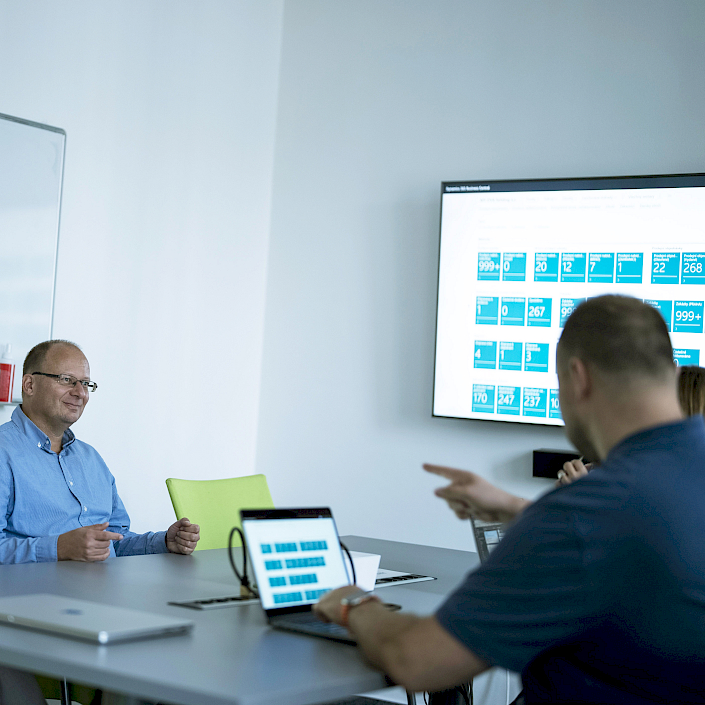
What companies typically evaluate
Industry-specific solution
Companies often ask whether the system fits their specific industry, such as manufacturing, distribution, or services.
Business Central provides a standard core that can be extended with industry-specific modules. These modules can come not only from Essence but also from other partners within the Microsoft ecosystem.
System openness
A key concern is whether the company will become dependent on a single vendor.
Business Central is an open system.
- modules from different partners can be combined
- external systems can be integrated
- the solution can grow over time
This flexibility is essential for companies already using specialized tools.
Licensing model
Licensing is one of the most practical questions early in the process.
Business Central uses named user licensing.
- pricing depends on user roles
- the scope reflects actual usage
Proper licensing setup impacts both cost and long-term scalability.
Standard vs customization
A critical decision during implementation.
The recommended approach is:
- around 80% standard
- around 20% customization
Customization should only be used where it brings real value. Excessive customization increases cost and complexity.
Integration with other systems
Companies need ERP to work within a broader ecosystem.
Business Central can be integrated with systems such as:
- time tracking
- document management systems (DMS)
- payroll and HR
- data boxes
- reporting tools
- other specialized applications
In addition, there is a partner network for more advanced or niche requirements.
Project financing
ERP is not a one-time purchase.
Costs are distributed over time. Full system operation starts after go-live, while earlier phases include implementation, configuration, testing, and preparation.
This allows companies to better manage project cash flow.
International rollout
For growing companies, the ability to expand internationally is essential.
Business Central supports:
- centralized system management
- expansion to multiple countries
- localization for legal and tax requirements
Customer role in implementation
ERP implementation is a collaborative effort.
The customer:
- provides process knowledge
- defines requirements
The implementation partner:
- guides the process
- designs the solution
- delivers the implementation
Without quality input from the customer, the system cannot be set up effectively.
System usability and independence
A common concern is whether every change requires a developer.
Business Central is designed so that:
- daily operations and basic adjustments can be handled internally
- advanced changes are handled by the partner
Training is part of the implementation.
Changing implementation partners
Companies sometimes ask whether they can switch partners.
The answer depends on:
- system architecture
- contracts
- ownership of custom developments
An open architecture reduces dependency on a single vendor.
Data, reporting and audit trail
Business Central operates on a single continuous database.
Data from finance, operations, and other areas are connected and available in real time. This supports:
- reporting
- controlling
- audits
The system maintains a full audit trail, allowing traceability of changes and transactions.
Transition from the current system
Moving to a new ERP does not mean starting from zero.
Functional processes are preserved. Inefficient or outdated processes are optimized.
The goal is to improve how the company operates, not to disrupt what already works.
FAQ
Does Business Central support industry-specific solutions?
Yes. It provides a standard core that can be extended with industry modules for manufacturing, distribution, services, and more. These modules can come from multiple partners within the Microsoft ecosystem.
Will we be dependent on a single vendor?
Not necessarily. Business Central is an open platform. However, proper architecture, documentation, and contractual setup are important to avoid unnecessary dependency.
Can Business Central integrate with other systems?
Yes. It can be integrated with tools such as time tracking, DMS, HR systems, data boxes, reporting platforms, and other specialized applications.
How does licensing work?
Licensing is typically based on named users and their roles. Pricing depends on how many users access the system and what functionality they need.
Is it better to use standard features or customization?
The recommended approach is to maximize standard functionality. Customization should be limited to areas where it provides clear business value.
Who is responsible for ERP implementation?
Implementation is a shared responsibility. The partner leads and delivers the solution. The customer provides business knowledge, data, and requirements.
Will we be able to manage the system ourselves?
Yes. After training, users can handle daily operations and basic adjustments. More complex changes are handled by the implementation partner.
Can Business Central be used internationally?
Yes. It supports multi-country operations with localization for legal and tax requirements.
How does the transition from the current system work?
Existing functional processes are retained. Inefficient ones are optimized. The goal is a smoother and more effective operation.
How does Business Central support reporting and audits?
The system works with connected real-time data in a single database. It provides strong reporting capabilities and a full audit trail for tracking changes and transactions.
If you are dealing with similar issues in your company, it is natural. Choosing an ERP system is one of the most important decisions for the further development of your company.
We will be happy to discuss your needs with you and together we will see if ERP is the right step for your company.
Also take a look at our references, where you will see specific projects and practical experience.



Contact Us
Have questions? Don’t hesitate to contact us, and we’ll be happy to answer them.
 +420 739 054 191
  info@essencebs.com


